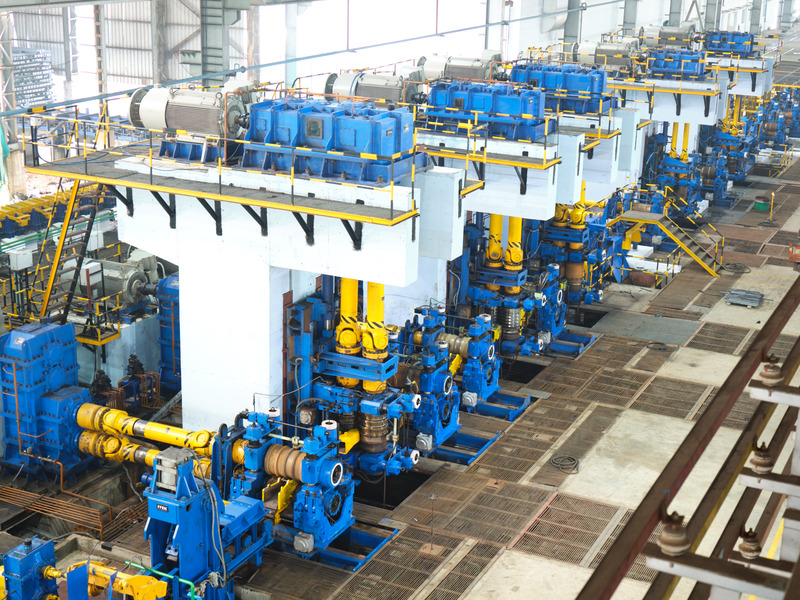
that shapes metal, typic-ally steel, by passing it through rotating rollers to reduce its thickness and alter its shape, producing products like sheets, bars, and rails. Key components in-clude pairs of heavy rollers, a frame-work to hold them, a drive system, guides for feeding metal, and cooling systems to manage heat. Rolling mills are categorized by their use, such as hot or cold rolling, and by the type of rolls, which are made from various iron and steel alloys designed for hardness and wear resistance.
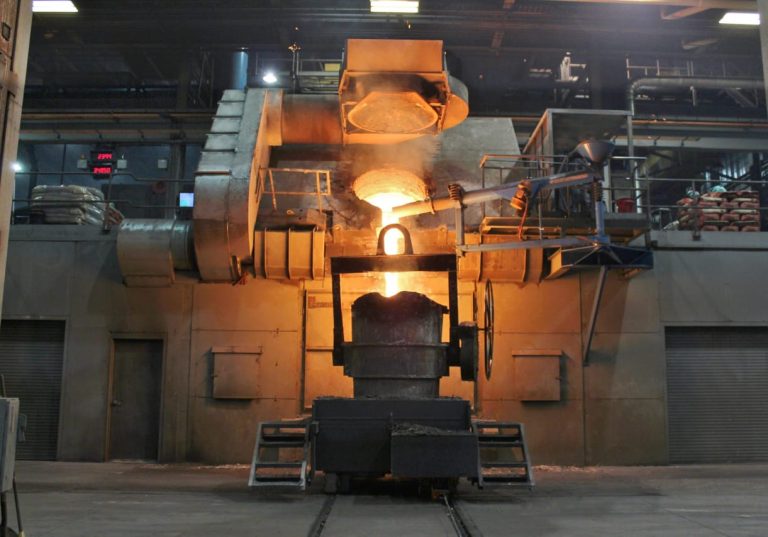
An induction furnace’s primary components are the crucible, which holds the metal charge; the induction coil, a water-cooled copper coil that generates a mag-netic field; a refractory lining for the crucible; a power system to supply alternating current; and a cooling system to prevent overheating.
When an alternating current flows through the coil, it creates a magnetic field that induces eddy currents within the metal charge, heating it to melting temperatures due to electrical resist-ance.
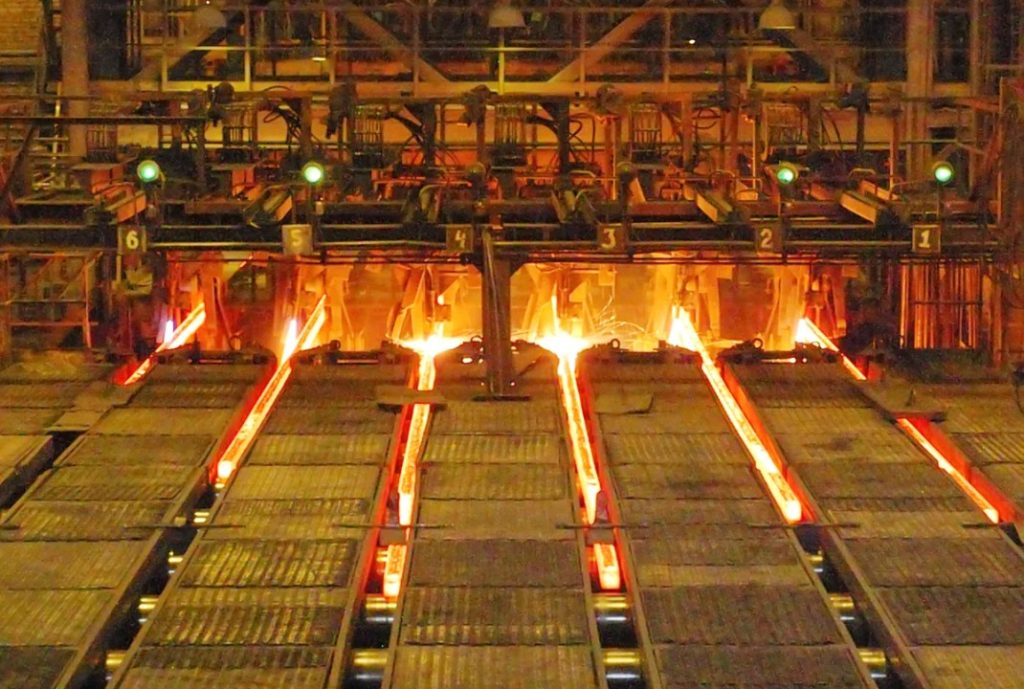
A continuous casting machine (CCM) consists of components like the ladle turret, tundish, water-cooled mold, secondary cool-ing system, strand guide, straight-ener, pinch roll, and cut-off unit. The process involves molten metal pouring from a ladle into a tundish, then into the water-cooled mold where it solidi-fies into a semi-finished shape (billet, bloom, or slab). This continuous strand is then cooled, guided, straightened, and finally cut into desired lengths for subsequent processing.
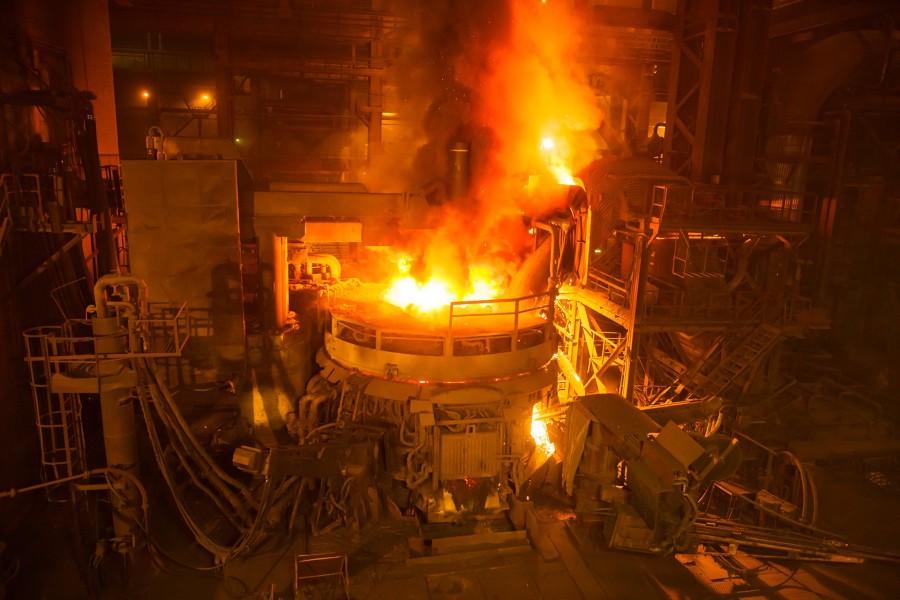
An Electric Arc Furnace (EAF) contains steel scrap or DRI, graphite electrodes that gener-ate arcs, a refractory-lined vessel with a water-cooled roof, and often a system for oxygen blowing and lime-based fluxes to form slag. It functions by creating an electric arc between the electrodes and the metallic charge, melting the material and facil-itating the removal of impurities like sulfur and phosphorus through oxida-tion and slagging.
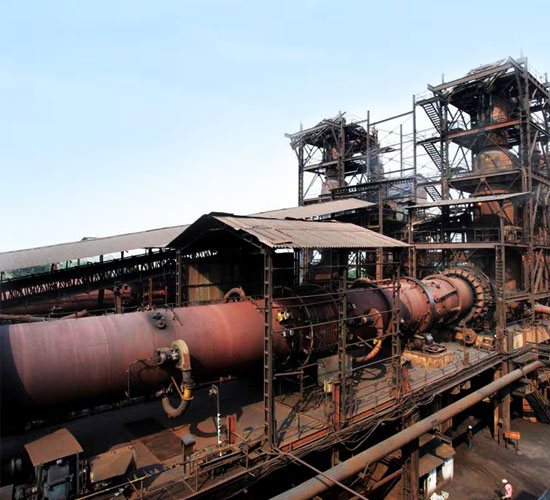
Direct Reduced Iron (DRI) is a product of iron ore reduction in the solid state, using reducing gases like carbon monoxide and hy-drogen, or carbon in the form of coal. This process occurs at temperatures below the melting point of iron, result-ing in a metallic iron product with min-imal impurities. DRI, also known as “sponge iron,” has a porous structure due to the removal of oxygen from the iron ore.
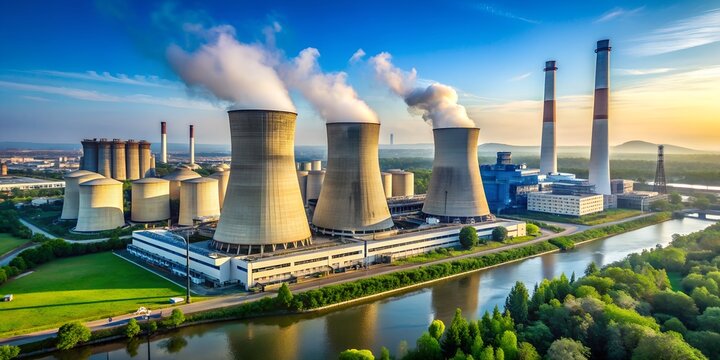
A thermal power plant, which converts heat energy into electrical energy, relies on several key components to function. These include the boiler, turbine, generator, condenser, and cooling tower. The boiler generates steam by heating water, which then drives the turbine. The turbine’s rotation is then converted into electricity by the generator. Finally, the condenser cools and condenses the steam back into water, and the cooling tower helps dissipate the heat from the condenser.
The coke oven process converts coal into a carbon-rich fuel called coke by heating it to high temperatures (1000-1100°C) in an oxygen-deficient environment. After coal is charged into a sealed oven, volatile components are driven off, forming coke oven gas and other by-products like tar and ammonia. Once the carbonization is complete, the hot coke is discharged and cooled, while the by-products are recovered for industrial use.
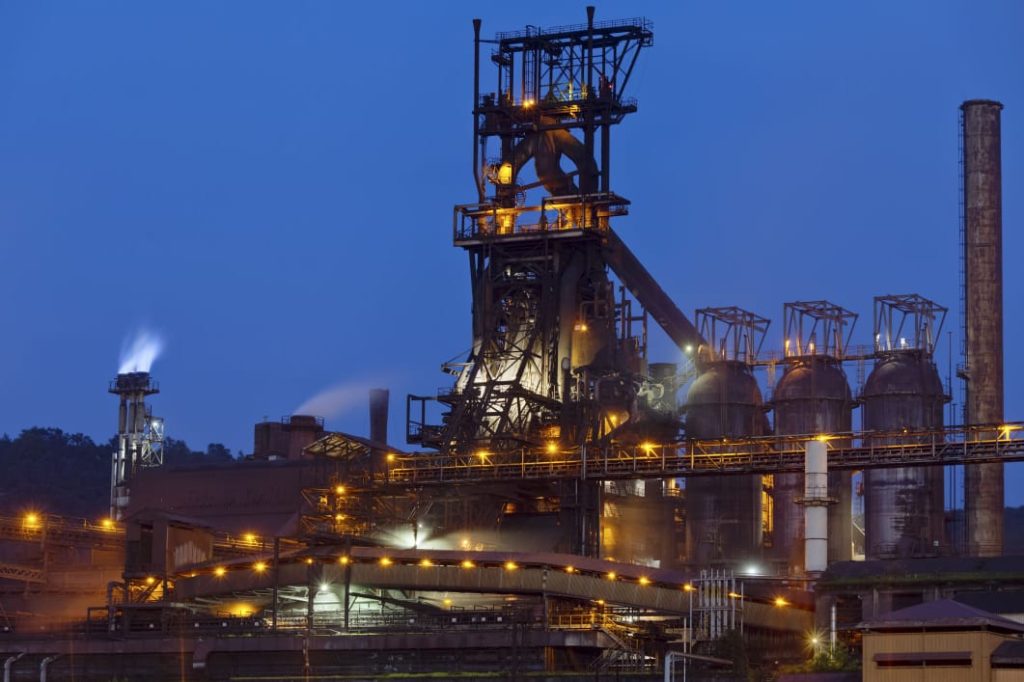
A blast furnace’s burden (or raw material) content includes iron ore (or sinter/pellets), coke, and limestone. Its primary gaseous content is blast furnace gas (BFG), a by-product consisting mainly of nitrogen (~55%), carbon monoxide (~21%), carbon dioxide (~11%), and hydrogen (~2%). Additionally, the furnace produces molten metal (hot metal/pig iron) and a slag from the reaction of the coke ash and limestone.
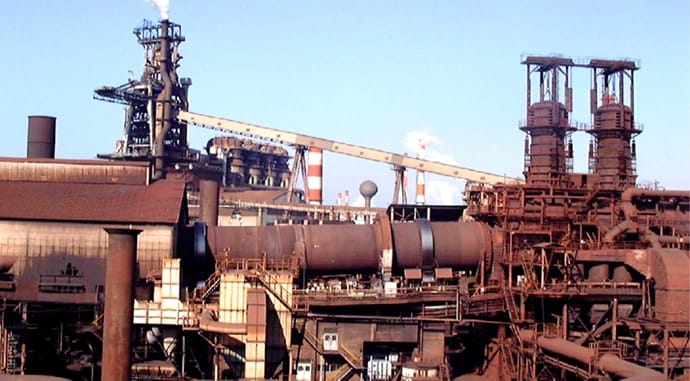
A “pellet plant” refers to either an iron ore pelletizing plant or a biomass pellet plant, both of which process fine raw materials into dense, uniform pellets for industrial use. Iron ore pellet plants produce <7-20mm diameter iron pellets for use in blast furnaces, while biomass pellet plants convert agricultural waste or wood into <4-20mm pellets for fuel. The content of a pellet plant includes the specific machinery (like crushers, dryers, and pellet mills) and the raw materials (iron ore, limestone, wood, or agricultural byproducts) processed to create pellets of specific chemical and physical properties suitable for their intended end-use.
Grow Your Business and Build Your Website or Software With us.